
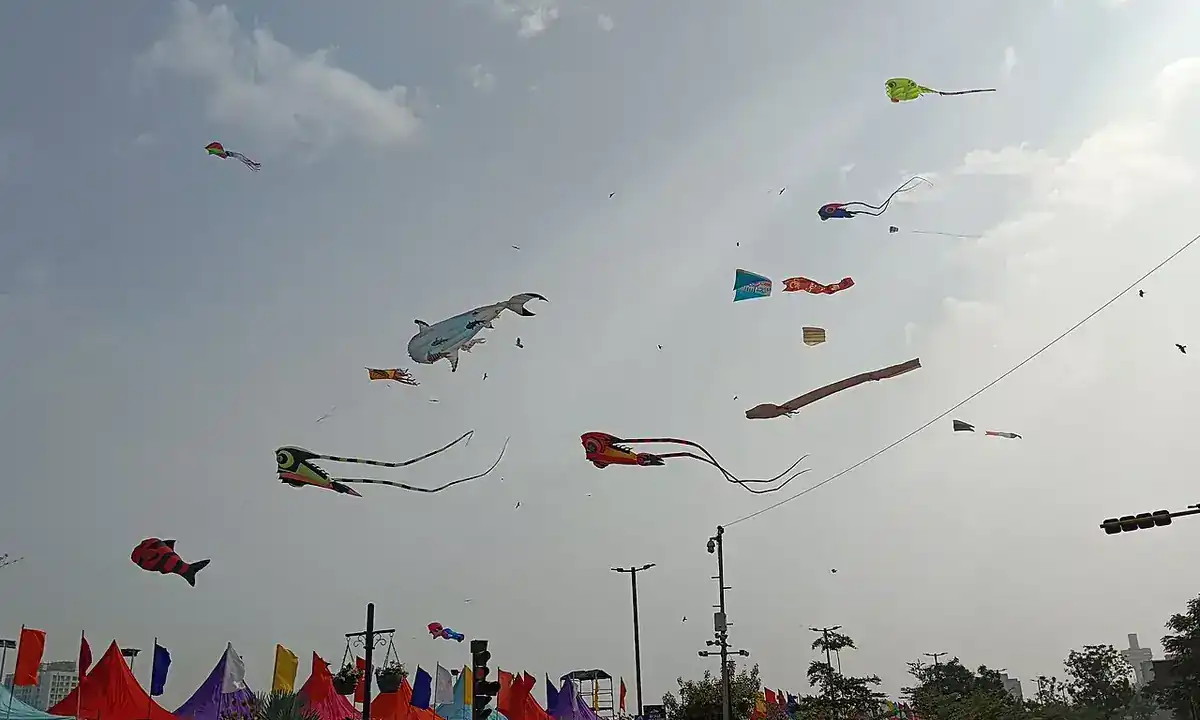
Makar Sankranti marks a traditional solar-calendar transition and brings together harvest celebrations, regional customs, kite festivals and shared seasonal foods.
Meaning and significance
Makar Sankranti is associated with the Sun's entry into Makara (Capricorn) in traditional Indian sidereal calendars. It is an important seasonal occasion and a time for gratitude, worship and generosity in many communities.
The Sun and Uttarayana
The occasion is associated with the Sun and the traditional concept of Uttarayana. Families may offer prayers and mark the agricultural season. Traditional calendar calculations and modern astronomical definitions do not always align exactly.
Kite flying and Uttarayan in Gujarat
Colourful kite flying is especially prominent during Uttarayan in Gujarat. Families gather on rooftops and open spaces. Safe kite strings and attention to birds, traffic and local regulations are important.
Regional celebrations
Maharashtra is known for exchanging tilgul sweets; some northern Indian communities share khichdi and give charity. Related harvest festivals include Pongal in Tamil Nadu and Magh Bihu in Assam, each with its own identity.
Food and family traditions
Sesame and jaggery sweets, til laddoo, chikki and regional dishes are popular. Food customs reflect local harvests and family traditions rather than one national menu.
Celebrations in New Zealand and abroad
Indian communities in New Zealand, Australia, Canada, the UK and the USA celebrate through temple visits, cultural events, kite flying and family meals. Local event dates may differ from the festival's calendar date.
Why the date is almost fixed
Unlike most Hindu festivals, Makar Sankranti follows the solar calendar. It marks the sun's entry into the zodiac sign of Capricorn (Makara) in the sidereal system, which currently happens on 14 or 15 January. Because of the slow shift known as precession, the date has drifted over the centuries and will gradually move later.
Til and gud: sesame and jaggery
Sesame seeds (til) and jaggery (gud) are eaten everywhere at Sankranti because they are warming in winter. In Maharashtra, people exchange tilgul, small sesame-jaggery sweets, saying "Tilgul ghya, god god bola" (take this sweet and speak sweetly). Til laddoos, chikki, gajak and rewari are sold across north India, and in Karnataka families exchange ellu bella, a mix of sesame, jaggery, coconut, peanuts and dried chickpeas.
Holy dips and the Magh Mela
Bathing in sacred rivers is considered especially meritorious on Makar Sankranti. Large crowds gather at the Ganga, at Prayagraj where the Magh Mela begins, and at Gangasagar in West Bengal, where the Ganga meets the sea and a major fair is held. Charity, such as giving food, blankets and sesame, is also part of the day.
Frequently asked questions
When is Makar Sankranti 2027?
This website lists Friday, 15 January 2027. Consult a trusted regional panchang for exact observance guidance.
Is Makar Sankranti always on 14 January?
No. Depending on the year and calendar calculation, it may be observed on 14 or 15 January.
Is Makar Sankranti the same as Pongal?
They are related seasonal celebrations but have distinct regional customs.
Why are sesame and jaggery shared?
They are traditional seasonal ingredients associated with hospitality and goodwill.
Why are kites flown?
Kite flying is a popular community tradition, particularly during Gujarat's Uttarayan.
Does every region celebrate the same way?
No. Names, ceremonies, foods and customs vary across India.
Why does Makar Sankranti fall on 14 or 15 January?
It follows the solar calendar, marking the sun's entry into Capricorn in the sidereal zodiac.
What does "tilgul ghya, god god bola" mean?
A Marathi greeting meaning "take this sesame-jaggery sweet and speak sweetly".