
Easter Sunday is the most important festival in the Christian year. It celebrates the resurrection of Jesus Christ on the third day after his crucifixion and comes at the end of Holy Week and the forty days of Lent. In India it is celebrated with dawn services, church bells and festive family meals, especially in Kerala, Goa, Mumbai and the north-east.
What Easter celebrates
According to the Gospels, Jesus was crucified on a Friday and buried in a tomb. On the Sunday morning, women who came to the tomb found it empty and were told that he had risen. For Christians, the resurrection is the foundation of their faith: a victory of life over death and a promise of new life. Easter greetings such as "Christ is risen" and the reply "He is risen indeed" express this joy.
How the date is set
Easter is a movable feast. In Western churches it falls on the first Sunday after the ecclesiastical full moon on or after 21 March, so it can be any Sunday between 22 March and 25 April. Many Orthodox churches calculate Easter using the Julian calendar, so their Easter is often one or more weeks later. Most churches in India follow the Western date.
Lent and Holy Week
Easter is preceded by Lent, forty days of prayer, fasting and almsgiving that begin on Ash Wednesday. Many Indian Christians give up meat, alcohol or other luxuries during Lent.
The final week is Holy Week. Palm Sunday recalls Jesus's entry into Jerusalem, and churches distribute palm fronds or, in Kerala, decorated coconut leaves. Maundy Thursday remembers the Last Supper, often with a foot-washing ceremony. Good Friday marks the crucifixion, and Holy Saturday is a day of quiet waiting.
The Easter Vigil and Sunday services
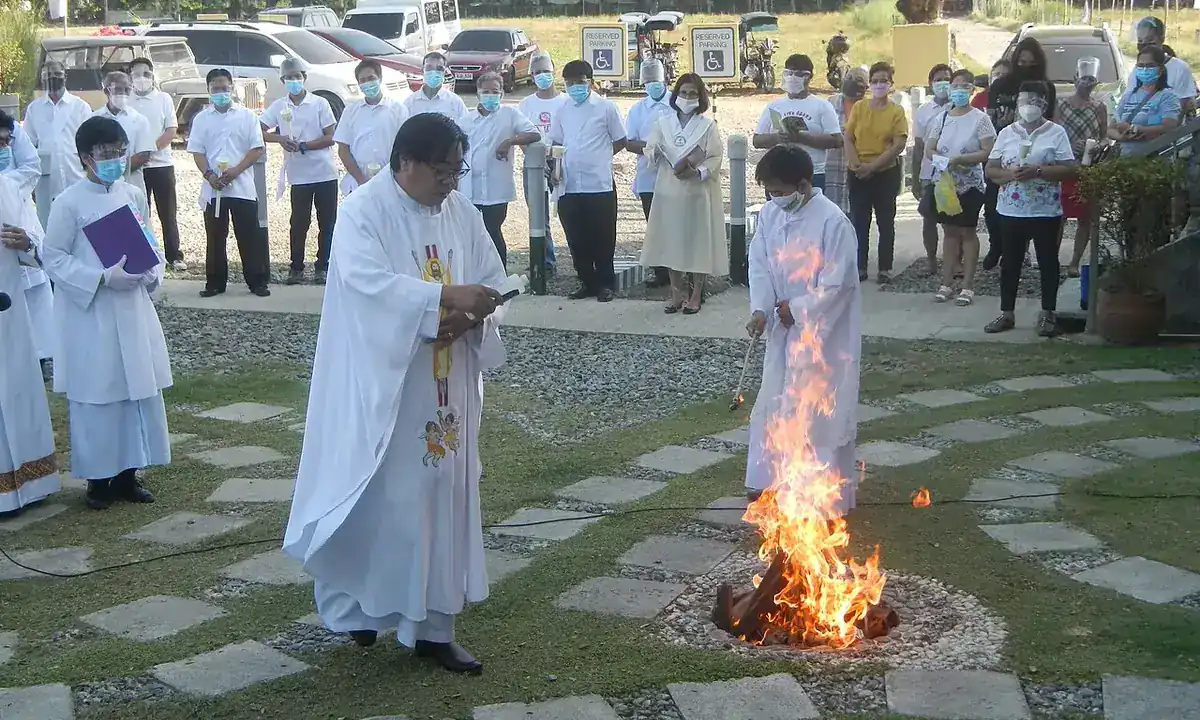
Many churches celebrate the Easter Vigil on Saturday night. It begins in darkness: a new fire is lit, the large Paschal candle is carried into the church, and candles are passed from person to person until the church is filled with light. Bells ring out again after falling silent since Thursday, and new members are often baptised. On Easter morning, churches are decorated with flowers and hold joyful services, sometimes at sunrise.
Easter eggs and symbols
Eggs have long been a symbol of new life, and for Christians they recall the empty tomb. Decorated eggs, chocolate eggs and egg hunts for children are now common in Indian cities. Lilies, lambs and the empty cross are other Easter symbols.
Easter food in India
Easter ends the Lenten fast, so meals are generous. In Kerala, Syrian Christian families often eat appam with chicken or mutton stew, duck roast or beef fry, and pidi (rice dumplings). Goan families may serve sorpotel, sannas, roast meats and marzipan Easter eggs. Hot cross buns, simnel cake and chocolate eggs are popular in bakeries.
Easter in New Zealand and Australia
In New Zealand, Good Friday and Easter Monday are public holidays, and Easter Sunday is a restricted shop-trading day, though many councils allow some shops to open. Australia also has public holidays across the Easter weekend. Indian churches and community groups, including Malayalam, Konkani and Tamil congregations, hold services in their own languages.
Frequently asked questions
When is Easter Sunday 2027?
Sunday, 28 March 2027 in the Western Christian calendar.
Why does the date of Easter change every year?
It is linked to the first full moon after the March equinox, so it moves between 22 March and 25 April in the Western calendar.
What is Lent?
A period of forty days of prayer, fasting and giving before Easter, starting on Ash Wednesday.
Why are eggs connected with Easter?
Eggs symbolise new life, and for Christians they recall the empty tomb of the resurrection.
Is Easter Sunday a public holiday in India?
Easter Sunday falls on a Sunday, so it is not a separate gazetted holiday. Good Friday is a national public holiday.
Why do Orthodox churches sometimes celebrate Easter later?
Many use the Julian calendar to calculate the date, which can put Easter one or more weeks after the Western date.