
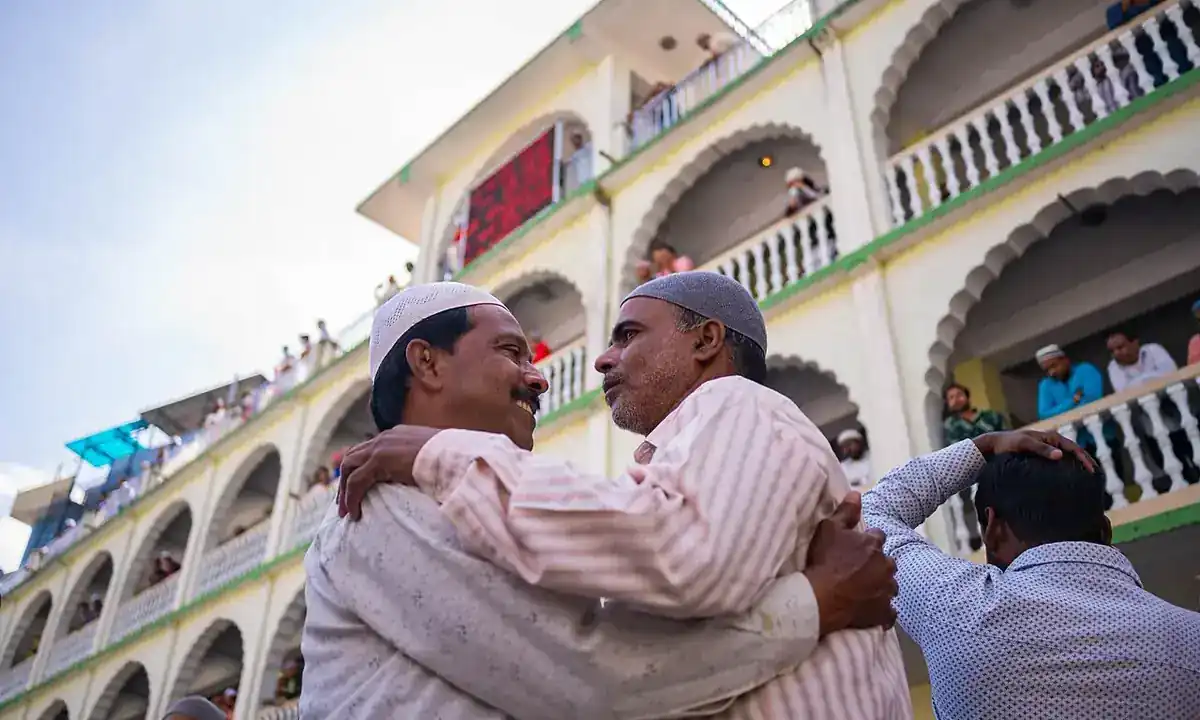
Eid al-Adha is a major Muslim festival of devotion, sacrifice and generosity, observed during the Islamic month of Dhu al-Hijjah.
What Eid al-Adha commemorates
Eid al-Adha remembers Prophet Ibrahim's willingness to obey God and the mercy shown in the story of sacrifice. It is a time for prayer, gratitude, family and helping people in need.
Why the date is expected
The festival falls on the tenth day of Dhu al-Hijjah in the Islamic lunar calendar. Its civil date can vary with local moon sighting and calendar conventions. The date shown here is provisional.
Eid prayers and greetings
Many Muslims attend a special congregational prayer, wear clean or festive clothing and greet family and friends with Eid Mubarak. Local mosques announce prayer times.
Qurbani and sharing
Where practised, qurbani is a ritual animal sacrifice performed under religious and local legal requirements. Meat is commonly shared with relatives and people in need. Local practices and eligibility rules vary.
Hajj and Dhu al-Hijjah
Eid al-Adha occurs during the season of Hajj, the pilgrimage to Mecca. Muslims who are not on pilgrimage may observe the festival in their own communities.
Eid al-Adha overseas
Muslim communities in New Zealand, Australia, Canada, the UK and the USA organise prayers and family gatherings. Confirm the date and practical arrangements with a trusted local mosque.
The story of Ibrahim
Eid al-Adha, the "festival of sacrifice", remembers the Prophet Ibrahim (Abraham), who in Islamic tradition was willing to sacrifice his son Ismail in obedience to God. As he prepared to do so, God provided a ram to be sacrificed instead. The story is seen as a lesson in faith, trust and submission to God, and the sacrifice of an animal at Eid recalls it.
Names across India and the world
In India the festival is widely known as Bakrid or Bakri Eid, and in other countries as Eid al-Kabir (the greater Eid), Kurban Bayram in Turkey or Hari Raya Haji in Malaysia and Singapore. The common greeting is "Eid Mubarak" (blessed Eid).
The day of Arafah
The day before Eid al-Adha is the Day of Arafah, when pilgrims performing Hajj gather on the plain of Arafat near Mecca. Many Muslims who are not on pilgrimage fast on this day, which is regarded as one of the most blessed days of the year. The first ten days of Dhu al-Hijjah are also a time for extra prayer and charity.
Food on Bakrid
Festive meals in India often include mutton biryani, korma, kebabs, nihari and haleem, followed by sheer khurma or seviyan. In Kerala, ghee rice and meat curry are common, and in Hyderabad families may prepare dishes such as marag. Meat from the sacrifice is shared with family, friends and people in need.
Frequently asked questions
When is Eid al-Adha expected in 2027?
Monday, 17 May 2027 is the provisional date listed here; confirmation depends on local lunar-calendar practice.
Is Eid al-Adha the same as Eid al-Fitr?
No. Eid al-Fitr marks the end of Ramadan, while Eid al-Adha is associated with Ibrahim's devotion and the Hajj season.
Why can the date differ?
Lunar-month dates can vary according to moon sighting and calendar methods.
What does qurbani mean?
A ritual sacrifice associated with Eid al-Adha, subject to religious and legal requirements.
What is Hajj?
The pilgrimage to Mecca, one of the Five Pillars of Islam for those able to undertake it.
Where can I find prayer times?
Consult your local mosque or Muslim community organisation.
Why is it called Bakrid in India?
Bakrid is the common South Asian name for Eid al-Adha; it is often linked with the Urdu word for goat, though it may come from the Arabic "baqar".
What is the Day of Arafah?
The day before Eid al-Adha, when Hajj pilgrims gather at Arafat. Many Muslims fast on this day.