
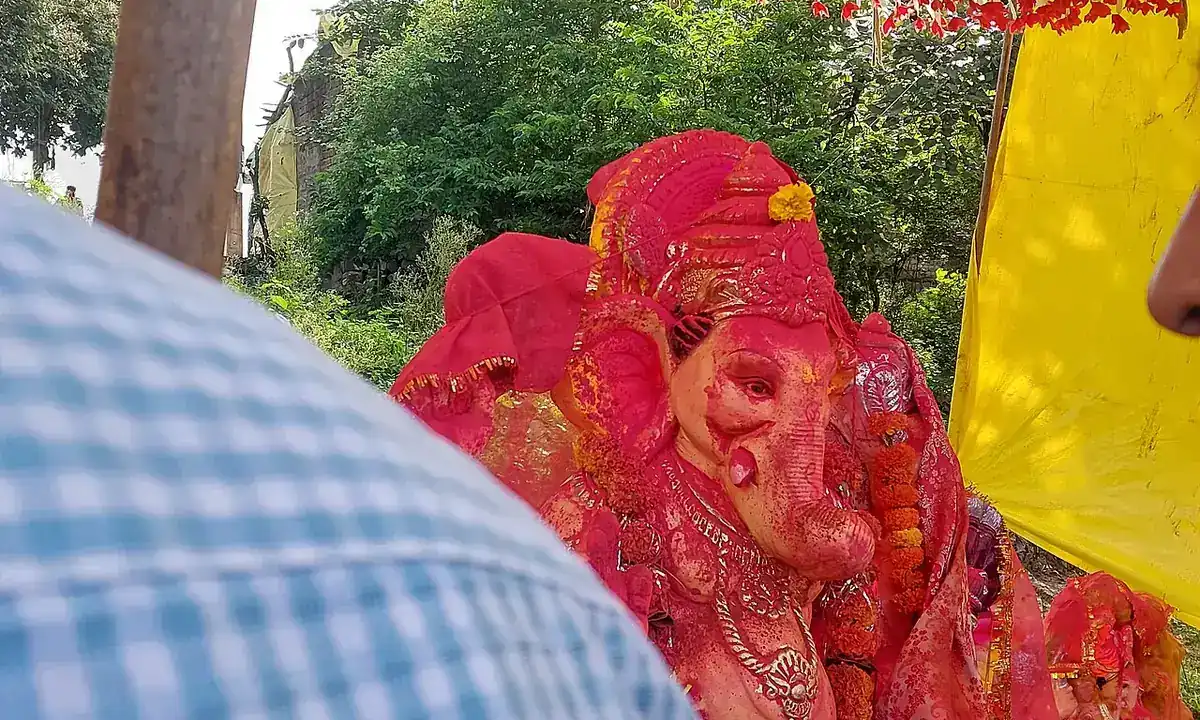
Ganesh Chaturthi welcomes Lord Ganesha into homes and neighbourhoods for a festival that can last from a day and a half to ten days. It mixes private worship, public art, music and food, and ends with the immersion of the Ganesha idol, known as visarjan.
Who is Ganesha?
Ganesha, also called Ganapati or Vinayaka, is one of the most widely worshipped Hindu deities. He is recognised by his elephant head, a large belly, a broken tusk and his vehicle, a mouse. Hindus pray to him as the remover of obstacles and the lord of beginnings, which is why his name is invoked at the start of weddings, house-warmings, new businesses and many other rituals.
In popular tradition Ganesha is the son of Shiva and Parvati. One well-known story tells how Parvati created him to guard her door, how Shiva replaced his head with an elephant's, and how he was then blessed to be worshipped before all other gods. Another tradition remembers him as the scribe who wrote down the Mahabharata as the sage Vyasa dictated it.
How the date is set
Ganesh Chaturthi falls on the fourth day (chaturthi) of the bright half of the lunar month of Bhadrapada, usually in late August or September. Because the tithi can begin or end partway through a day, some calendars place the festival a day earlier or later. The main puja is traditionally done around midday, the period associated with Ganesha's birth, so panchangs also publish a preferred time window for the installation.
Bringing Ganesha home
Many families bring home a clay murti, often decorated in bright colours, and place it on a decorated platform called a makhar or mandap. The installation ritual, pranapratishtha, invites the deity into the idol. Daily worship then includes flowers, durva grass (a three-bladed grass closely associated with Ganesha), red hibiscus, incense, lamps and an aarti, often the Marathi aarti "Sukhakarta Dukhaharta".
How long Ganesha stays is a family custom. Common choices are one and a half, three, five, seven or ten days. On the final day the household performs a last aarti before taking the idol for immersion.
Modak and festival food
Modak is the sweet most associated with Ganesha. The classic Maharashtrian ukadiche modak is a steamed rice-flour dumpling filled with fresh coconut and jaggery and flavoured with cardamom; fried and chocolate versions are popular too. Offerings commonly number 21. Other favourites include puran poli, karanji, laddoos and, in the south, kozhukattai and sundal. A simple prasad of coconut, jaggery and fruit is equally traditional.
Public pandals and their history
Ganesh Chaturthi was largely a household festival until 1893, when the freedom fighter Lokmanya Bal Gangadhar Tilak promoted public celebrations in Pune to bring people together across caste and class. Today large community pandals in Mumbai, Pune and Hyderabad attract huge crowds; Mumbai's Lalbaugcha Raja and Pune's Kasba Ganpati are among the best known. Pandals often host music, dance, blood-donation drives and themed displays.
Regional names and customs
In Karnataka the festival is preceded by Gowri Habba, when married women worship Goddess Gowri (Parvati). In Tamil Nadu it is known as Vinayaka Chaturthi, and families prepare kozhukattai. In Goa, where it is called Chavath, extended families gather in ancestral homes. Andhra Pradesh and Telangana hold large processions, and Hyderabad's Khairatabad Ganesh is famous for its height.
A widely followed folk belief says people should avoid looking at the moon on Chaturthi night, recalling a story in which the moon laughed at Ganesha and was cursed.
Visarjan and eco-friendly celebrations
Visarjan means immersion. Processions carry the idol to a river, lake or the sea with drums and chants of "Ganpati Bappa Morya, pudhchya varshi lavkar ya" (O Lord Ganesha, come back soon next year). Idols made of plaster of Paris and synthetic paint can harm waterways, so many cities now set up artificial immersion tanks, and families increasingly choose shadu clay idols, natural colours, seed idols or symbolic immersion in a bucket at home.
Celebrating outside India
Hindu communities in New Zealand, Australia, the United Kingdom, Canada and the United States hold Ganesh Chaturthi pujas at temples and community halls, often on the nearest weekend. Local councils may have rules on immersion, so temples usually arrange a symbolic visarjan or an approved site. A small clay idol, durva grass, flowers and homemade modak are enough for a meaningful puja at home.
Frequently asked questions
When is Ganesh Chaturthi 2027?
Saturday, 4 September 2027 in India.
Who is Ganesha?
A Hindu deity worshipped as the remover of obstacles and the lord of beginnings. He is the son of Shiva and Parvati in popular tradition.
What is modak?
A sweet dumpling, usually rice flour filled with coconut and jaggery, that is Ganesha's favourite offering. It can be steamed or fried.
How long is Ganesh Chaturthi?
It depends on the family or community: one and a half, three, five, seven or ten days are all common. The ten-day celebration ends on Anant Chaturdashi.
What is visarjan?
The immersion of the Ganesha idol in water at the end of the festival, symbolising the deity's return to his abode.
Why should you not look at the moon on Ganesh Chaturthi?
A popular legend says the moon mocked Ganesha and was cursed, so seeing the moon that night is believed to bring false accusations. It is a folk belief rather than a scriptural rule followed by everyone.
How can I celebrate sustainably?
Choose an unbaked clay or seed idol, use natural colours and flowers, and immerse at home in a bucket or at an approved tank, then use the clay and water in your garden.