
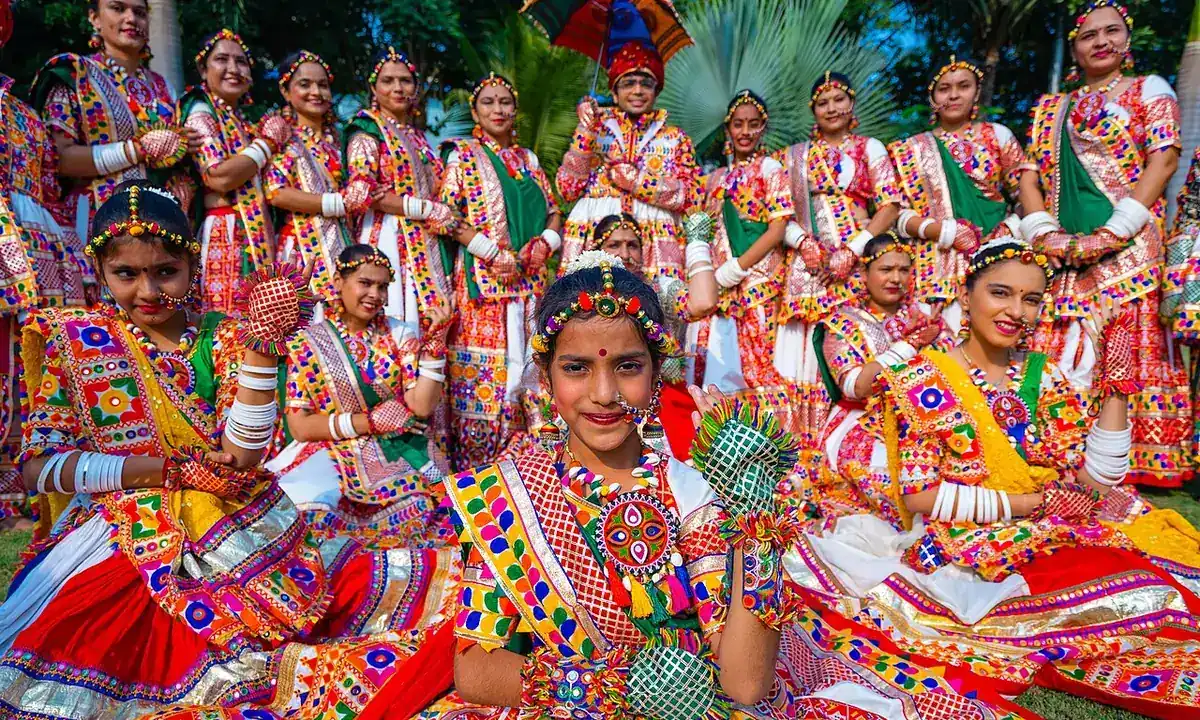
Sharad Navratri opens nine nights of devotion to the Goddess Durga, followed by Vijayadashami on the tenth day. This guide focuses on how people keep Navratri today: the fasting customs, the food, the Garba and Dandiya nights of Gujarat, and practical tips for celebrating away from India.
Two Navratris each year
Hindus observe Navratri twice a year. Chaitra Navratri comes in spring and ends with Rama Navami; Sharad Navratri comes in autumn, in the month of Ashvin, and is the larger festival. Sharad Navratri begins on the first day of the bright fortnight (Pratipada) and, depending on how the lunar days fall, can run for eight to ten days rather than exactly nine.
How people fast
Fasting is personal and varies widely. Some people eat one meal a day, some take only fruit and milk, and some keep the first and last days only. Common rules for a Navratri fast include avoiding grains, pulses, onion, garlic, meat, alcohol and ordinary table salt.
Instead, cooks use flours made from buckwheat (kuttu), water chestnut (singhara), amaranth (rajgira) or barnyard millet (samak or sama rice), along with sabudana (sago), potatoes, sweet potatoes, pumpkin, paneer, yoghurt, nuts and rock salt (sendha namak).
Navratri food ideas
Popular fasting dishes include sabudana khichdi and sabudana vada, kuttu puri or pakoras, singhare ka halwa, samak rice pulao, jeera aloo cooked with rock salt, makhana kheer and fruit raita. On Ashtami or Navami, many families prepare puri, black chana and sooji halwa for Kanya puja, which is also when many people break their fast.
Garba and Dandiya
In Gujarat and among Gujarati communities around the world, Navratri nights are for dance. Garba is danced in circles around a lamp or an image of the Goddess, called the garbo, symbolising life revolving around the divine. Dandiya Raas is danced in pairs with decorated sticks and is associated with the playful dances of Krishna.
Traditional dress includes chaniya choli for women and kediyu with dhoti or churidar for men, often with mirror work and bright embroidery. Community halls hire live bands, and the dancing can continue late into the night.
Colours, music and devotion
In Maharashtra and elsewhere, a different colour is assigned to each day of Navratri and many people dress to match. The sequence changes every year according to the weekday on which the festival starts, so check a current list. Devotional singing, reading the Durga Saptashati (also called Devi Mahatmya) and visiting temples of the Goddess, such as Vaishno Devi in Jammu, are also central for many families.
Regional celebrations at a glance
- West Bengal and eastern India: Durga Puja pandals over the last five days.
- Gujarat: Garba and Dandiya every night.
- Tamil Nadu, Karnataka, Andhra Pradesh: Golu doll displays; Saraswati and Ayudha Puja on Navami.
- Karnataka: Mysuru Dasara.
- Himachal Pradesh: Kullu Dussehra, which begins on Vijayadashami and runs for a week.
- North India: Ramlila performances culminating in Dussehra.
Celebrating Navratri abroad
Garba nights are among the largest Indian community events in cities such as Auckland, Sydney, Melbourne, London, Leicester, Toronto and New Jersey, and they often sell out, so book tickets early. Indian grocers stock kuttu and singhara flour, sabudana and rock salt in the weeks before. Many temples hold evening aarti and a Kanya puja on the weekend. See our worldwide events directory for listings.
Frequently asked questions
When does Sharad Navratri begin in 2027?
Thursday, 30 September 2027 in India.
When is Dussehra 2027?
Saturday, 9 October 2027 in India.
Can I drink tea or coffee during the Navratri fast?
Many people do, especially with milk. Rules depend on family custom, so follow what your household or community practises.
Which flours are allowed during Navratri?
Buckwheat (kuttu), water chestnut (singhara), amaranth (rajgira) and barnyard millet (samak) flours are commonly used instead of wheat and rice.
What is the difference between Garba and Dandiya?
Garba is a circular dance performed with hand claps around a central lamp. Dandiya Raas is danced in pairs or lines with decorated sticks.
Why is Navratri sometimes eight or ten days long?
The festival follows lunar days (tithis), which do not line up exactly with calendar days, so a tithi can be skipped or repeated.
When should I break the Navratri fast?
Many families break it on Ashtami or Navami after Kanya puja; others break it on Vijayadashami. Follow your family or temple tradition.